
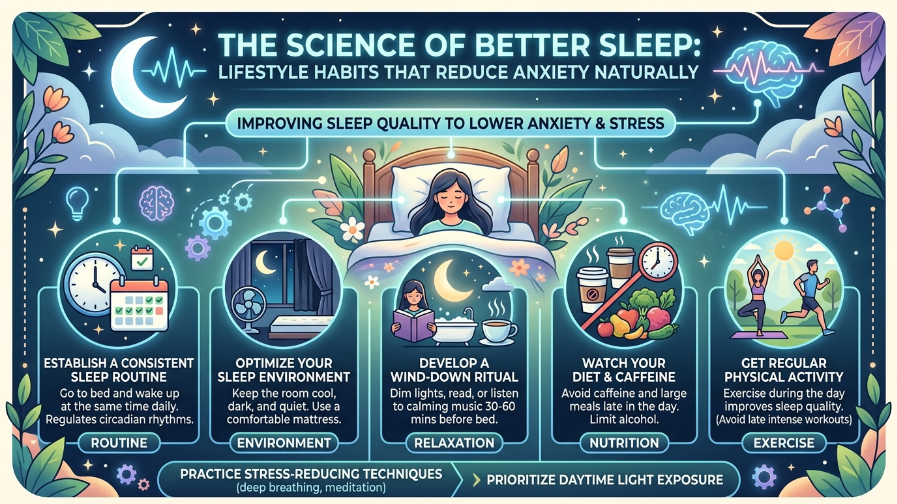
Sleep and anxiety are deeply connected. When sleep quality declines, anxiety often increases. At the same time, anxiety can make it difficult to fall asleep, stay asleep, or feel rested after waking up. This creates a frustrating cycle that affects mental clarity, emotional balance, physical health, and overall quality of life.
In today’s fast-paced digital world, millions of people struggle with sleep disturbances caused by stress, overstimulation, irregular routines, and unhealthy lifestyle habits. While medication may help in some cases, many individuals are now looking for natural and sustainable ways to improve sleep and reduce anxiety.
The good news is that scientific research continues to show that small lifestyle changes can significantly improve sleep quality while naturally lowering stress and anxiety levels. From light exposure and nutrition to movement and bedtime routines, everyday habits play a major role in how the brain and body recover at night.
Why Sleep and Anxiety Are Closely Linked
Sleep is essential for emotional regulation and cognitive recovery. During sleep, the brain processes information, regulates hormones, repairs the body, and restores mental energy.
When sleep becomes disrupted, the nervous system often becomes more reactive. Stress hormones such as cortisol may remain elevated, making individuals feel more anxious, irritable, and emotionally overwhelmed.
Poor sleep can contribute to:
- Increased stress sensitivity
- Difficulty concentrating
- Mood instability
- Racing thoughts
- Reduced emotional control
- Fatigue and mental exhaustion
Anxiety can also interfere with the body’s ability to relax before bedtime. Overthinking, excessive worry, and mental overstimulation may keep the nervous system in a heightened state of alertness.
This creates a cycle where:
- Anxiety disrupts sleep
- Poor sleep worsens anxiety
- Increased anxiety leads to further sleep problems
Breaking this cycle often starts with improving lifestyle habits that support the body’s natural sleep mechanisms.
The Body’s Internal Clock Matters More Than People Realize
One of the most important factors influencing sleep quality is the circadian rhythm — the body’s natural internal clock.
The circadian rhythm regulates:
- Sleep and wake cycles
- Hormone production
- Energy levels
- Body temperature
- Cognitive performance
When people maintain irregular sleep schedules, the circadian rhythm can become disrupted, making it harder to fall asleep consistently.
Modern lifestyles often interfere with this natural rhythm through:
- Late-night screen exposure
- Inconsistent sleep schedules
- Artificial lighting
- Shift work
- Excessive caffeine intake
Creating a stable sleep schedule is one of the most effective ways to reduce anxiety naturally.
Blue Light and Digital Overstimulation Affect Sleep Quality
Technology has become one of the biggest sleep disruptors in modern life.
Phones, tablets, computers, and televisions emit blue light, which can suppress melatonin production. Melatonin is the hormone responsible for signaling to the body that it is time to sleep.
Late-night screen use may:
- Delay sleep onset
- Increase mental stimulation
- Reduce sleep quality
- Make the brain feel more alert
Social media and digital content can also increase anxiety through:
- Information overload
- Emotional overstimulation
- Comparison stress
- Constant notifications
Reducing screen exposure before bedtime can significantly improve sleep quality.
Morning Sunlight Plays a Powerful Role in Sleep Regulation
Exposure to natural sunlight early in the day helps regulate circadian rhythms and supports healthy melatonin production later at night.
Even 10–30 minutes of outdoor light exposure in the morning may improve overall sleep consistency.
Physical Activity Helps Calm the Nervous System
Regular movement helps:
- Lower cortisol levels
- Reduce muscle tension
- Improve mood
- Increase sleep drive
- Support emotional regulation
Even moderate daily movement can produce noticeable improvements in anxiety and sleep quality over time.
Nutrition and Caffeine Intake Can Affect Sleep More Than Expected
Caffeine is one of the most common sleep disruptors because it stimulates the nervous system and blocks adenosine, the chemical responsible for sleepiness.
Creating balanced eating habits throughout the day can support healthier sleep patterns naturally.
Relaxation Rituals Help Signal the Brain to Unwind
Creating calming nighttime rituals can help signal to the nervous system that it is time to slow down.
These activities help shift the body away from “fight-or-flight” mode and toward a more relaxed parasympathetic state.
Sleep Environments Influence Mental and Physical Recovery
The bedroom environment itself also affects sleep quality.
A sleep-friendly environment typically includes:
- Cool temperatures
- Minimal noise
- Low lighting
- Comfortable bedding
- Reduced clutter
Stress Management During the Day Improves Sleep at Night
Many sleep problems originate long before bedtime.
Managing stress proactively can improve nighttime recovery.
The Role of Whole-Body Health in Sleep Quality
Sleep is also influenced by overall physical wellness and internal comfort. For example, maintaining proper indoor temperature during colder months can help stabilize sleep cycles and reduce nighttime disruptions.
In some cases, homeowners experience sleep disturbances due to cold indoor environments, especially when heating systems are inefficient. Professional heating services houston tx can help ensure consistent warmth, which supports more stable sleep conditions during colder nights.
Similarly, outdated or malfunctioning heating systems may cause inconsistent temperatures that affect rest quality. Upgrading systems through professional furnace installation houston tx services can improve indoor comfort, energy efficiency, and overall sleep stability.
Stress Management During the Day Improves Sleep at Night
Many sleep problems originate long before bedtime.
Chronic stress accumulates throughout the day and often becomes most noticeable when people finally try to relax at night.
Managing stress proactively can improve nighttime recovery.
Perfection Is Not Necessary for Better Sleep
Improving sleep naturally does not require perfect habits. Small, consistent changes often lead to meaningful improvements over time.
Final Thoughts
The science of better sleep shows that anxiety and rest are deeply connected. Modern lifestyles often disrupt natural recovery systems, but lifestyle changes can restore balance.
From reducing screen exposure and improving daily routines to maintaining physical comfort at home, many factors influence sleep quality.
Better sleep is not just about rest — it is about creating conditions where the mind and body can fully recover, reset, and restore emotional balance naturally.